
Megan Marlatt
myths and mummers
4.10.26 - 5.30.26
“Since I first learned to make big head masks, (or capgrossos), from the Catalonian folk artists Ventura and Hosta in 2012, I have studied the European tradition of pre-Lenten carnival. Most Americans think of amusement park rides when they hear the word “carnival,” but I’m referring to an old event, evolved from Western pagan rituals and adapted into European Catholic and Protestant culture. It’s the same carnival Bruegel painted in “The Fight Between Carnival and Lent” nearly 500 years ago. Rooted in an ancient agrarian society dependent on the changing seasons, carnival’s time frame teeters between the weakening night force of winter and the strengthening day force of spring. Therefore, many carnival rituals across Western Europe involve shedding the evils of winter, waking up the icy Earth and ushering in the fecund warmer months of spring.
But what if one day the Earth doesn’t want to wake up?”
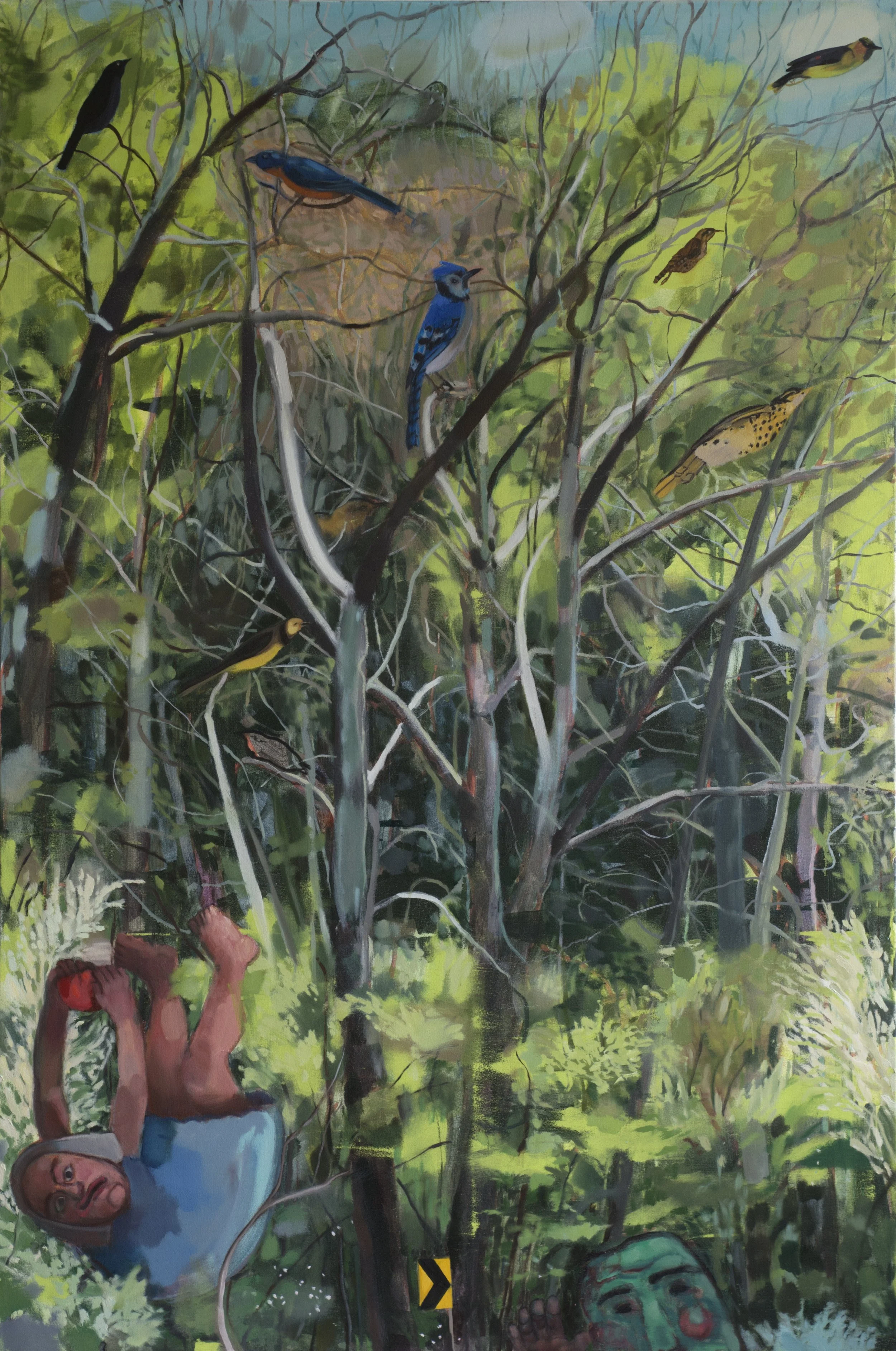
“The anticipation of the four seasons runs deep in our narratives, economy, and psyche. Our food has been cultivated over thousands of years through our expectations of Earth’s seasonal timing, and so has the myths and folklore connected to that cultivation. But with the onset of climate change, we know that the seasons will not be what they once were. My narrative paintings use personifications of the seasons and the weather, (e.g., Persephone, Jack Frost, etc.), as indicators of our cultural ties to nature…”
Bear Wrestling the Angel
24 × 34 in. | Acrylic & Oil on Linen | 2025
June Leaf Sleeps Among the Pollen
14 × 11 in. | Acrylic and Oil on Panel | 2025
Buddha Bear in the Woods
24 × 34 in. | Acrylic & Oil on Canvas | 2025
The French Veggies
32 × 30 × 10 in. | Papier-Maché | 2024
June Leaf Sleeps Among the Lichen
11 × 14 in. | Acrylic and Oil on Panel | 2025
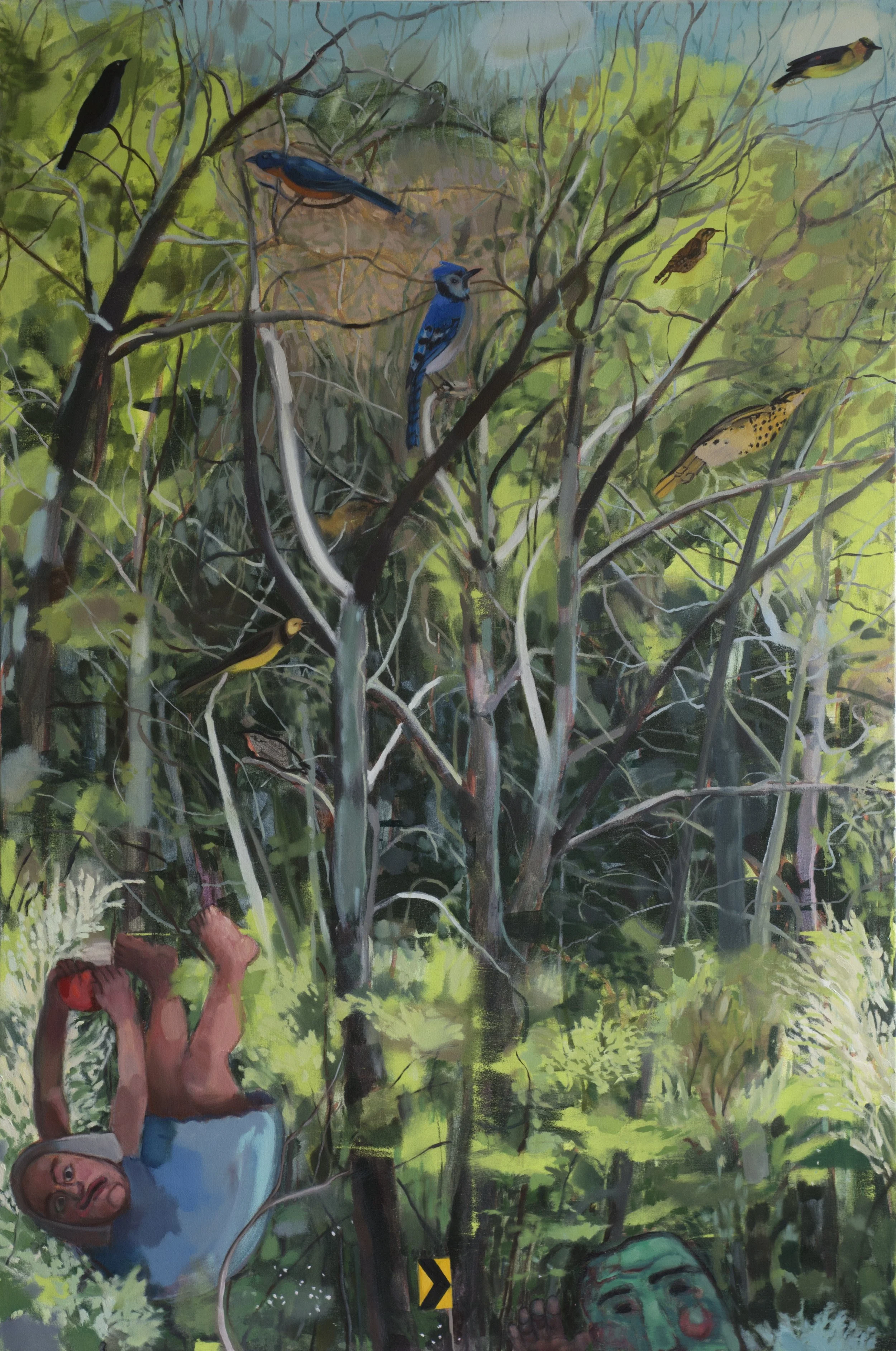
“Because our contemporary environment is under the siege of climate change, these mythical gods and spirits experience extreme weather conditions along with us. Unlike scientific illustration that sees the natural world as a static collection of visual facts, or pastoral landscapes that depict nature as pristine and serene, my paintings endeavor to show nature as a mysterious environment with its own will and sovereignty.”
Fallen Persephone in Spring
48 × 68 in. | Acrylic & Oil on Canvas | 2024
Salt and Pepper
21 × 32 × 10 in. | Papier-Maché | 2019
Birds and Bodhisattva Squirrels
24 × 34 in. | Acrylic and Oil on Canvas | 2025
Persephone in Missoula on July 24, 2024
48 × 68 in. | Acrylic & Oil on Canvas | 2025
Covid Corvid
34 × 13 × 20 in. | Papier-Maché | 2022
Frost on Pumpkins
14 × 11 in. | Acrylic and Oil on Canvas | 2026
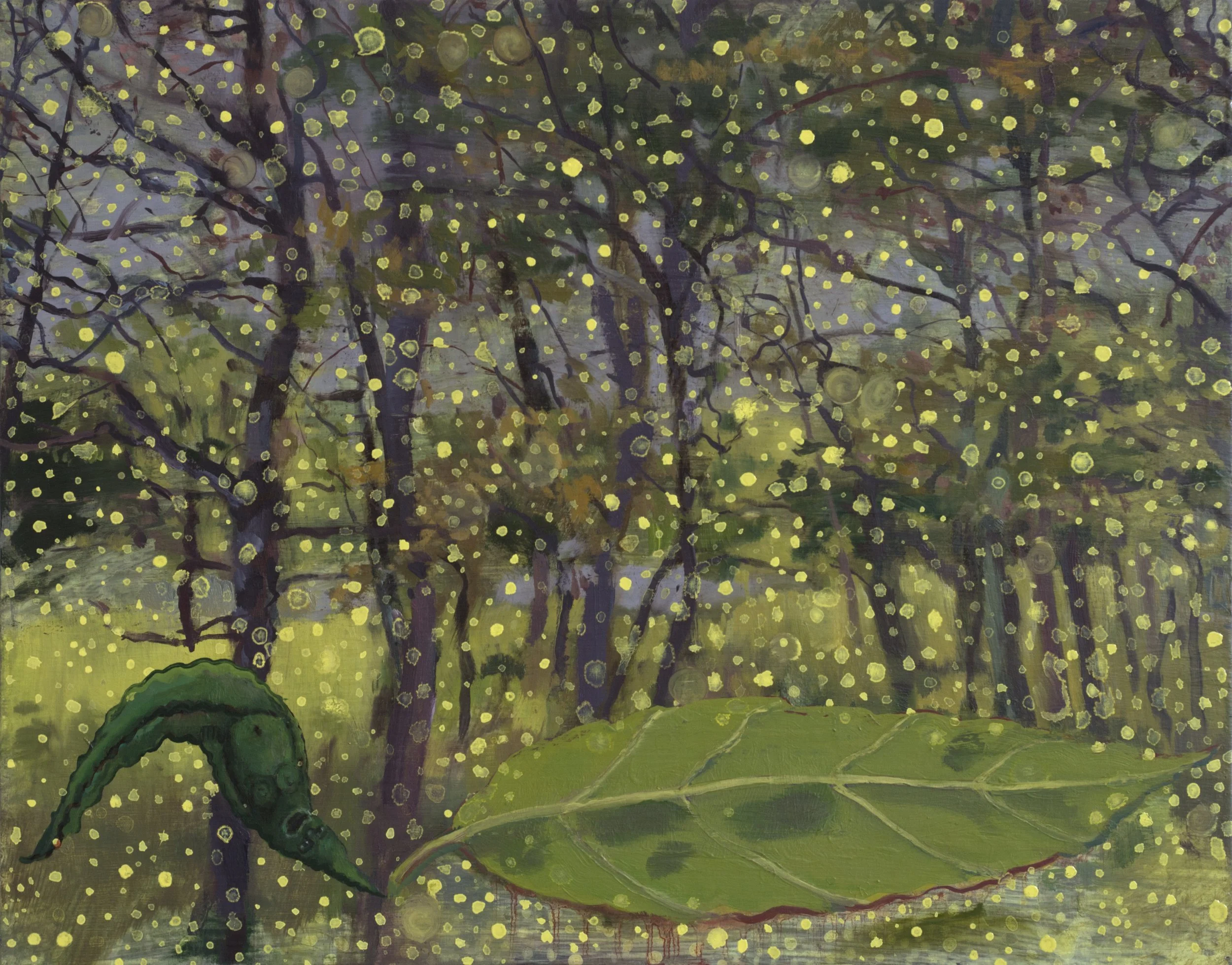
Please join us for an Artist Reception on Friday, April 17th from 5-8pm!
We are also holding an Earth Day Art Walk on Wednesday, April 22nd from 4:45-5:30pm featuring Megan’s Papier-Maché heads! Please meet at 615 E Peach St. around 4:30 - we will walk from the gallery to Bozeman Public Library and back…
Bring any instruments or noise makers, costumes, art pieces etc., that you would like to walk with! We will pick up any litter along the way — trash bags and disposal provided in tandem with Common Ground landscaping.